Vietnamese Pangasius Supplier: The Ultimate Sourcing & Quality Guide
In the global seafood market, finding a reliable Vietnamese Pangasius supplier is crucial for ensuring product consistency and food safety. As the “heart” of the world’s Pangasius industry, Vietnam’s Mekong Delta provides over 90% of the global supply. This guide by BAKACO provides everything you need to know about sourcing, processing standards, and the logistics of importing premium Pangasius.
Why Vietnam is the Global Hub for Pangasius
Vietnam isn’t just a producer; it is the undisputed leader, accounting for over 90% of the global Pangasius trade. This dominance is not accidental but the result of a unique combination of natural advantages, decades of expertise, and a sophisticated industrial ecosystem. Vietnam’s unique ecosystem in the Mekong Delta offers the perfect conditions for aquaculture. Unlike other regions, Vietnamese Pangasius (Pangasius hypophthalmus) is known for its mild flavor, firm texture, and white meat.
Expert Insight: Over decades, the industry has evolved from small-scale farming to high-tech seafood processing hubs that meet the strictest EU and US regulations.
The Ideal Ecosystem: The Mekong Delta Advantage
The Mekong Delta provides an environment that is impossible to replicate elsewhere. The vast network of rivers and stable tropical climate (averaging 26-30°C) offers the perfect “home” for Pangasius hypophthalmus.
- Freshwater Abundance: The continuous flow of the Mekong River ensures high oxygen levels and natural water exchange, which is vital for the health and growth of the fish.
- All-Year Production: Unlike other regions that face harsh winters, Vietnam can harvest and process Pangasius 365 days a year, ensuring a stable supply chain for international retailers and distributors.
Unmatched Industrial Scale and Expertise
Over the last 20 years, Vietnam has transformed Pangasius farming from a local tradition into a high-tech seafood industry.
- Skilled Labor Force: The art of filleting is where Vietnam truly shines. Our workers are world-renowned for their precision, ensuring maximum yield and perfectly “well-trimmed” products that meet the aesthetic and quality standards of premium markets like the EU and Japan.
- Closed-loop Production: Leading exporters like BAKACO often employ a “Farm-to-Table” model. We control everything from fingerling production and high-quality feed mills to advanced IQF (Individual Quick Freezing) processing lines.
Global Integration and Free Trade Agreements (FTAs)
Vietnam’s strategic position in global trade makes sourcing from a Vietnamese Pangasius supplier more cost-effective than ever.
- Tariff Advantages: Thanks to agreements like the EVFTA (EU-Vietnam Free Trade Agreement) and CPTPP, import duties on Vietnamese Pangasius have been significantly reduced or eliminated in major markets.
- Regulatory Compliance: The industry has matured to meet the world’s most stringent food safety regulations. From the US Farm Bill requirements to the EU’s strict traceability laws, Vietnamese exporters have proven their ability to adapt and comply.
Commitment to Sustainability and R&D
As the global hub, Vietnam leads the way in sustainable aquaculture research.
- Certifications as Standard: What used to be “optional” is now standard. Most export-oriented farms in Vietnam are now ASC, BAP, or GlobalGAP certified.
- Continuous Improvement: Ongoing R&D in fish health, water filtration technology, and byproduct utilization (such as fish oil and collagen) ensures that the industry remains competitive and environmentally conscious for decades to come.
Expert Tip for Buyers: When sourcing from the global hub, look for suppliers located in strategic provinces like An Giang or Dong Thap. These areas are the “heart” of the Mekong Delta, offering the shortest logistics route from farm to factory, which is critical for maintaining the freshness and texture of the fish.
Key Product Varieties: Finding the Right Fit
The versatility of Vietnamese Pangasius is its greatest strength. Depending on the target market—whether it’s high-end dining in Europe, retail chains in North America, or wholesale in Asia—selecting the right specification is vital for profitability and consumer satisfaction.
The Fillet Spectrum: Color and Trimming Standards
The meat color and trimming level are the primary factors determining the grade and price of frozen pangasius fillets.
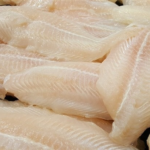
- White Meat (Premium Grade): This is the highest quality, characterized by pure white flesh. It is most sought after by the EU, US, and Australian markets for fine-dining and premium retail.
- Light Pink Meat: A more cost-effective option, popular in South America and parts of Asia. The taste profile remains identical to white meat, but the color is slightly tinted.
- Light Yellow Meat: Primarily used in markets where the fish is heavily seasoned or used in industrial food processing.
Trimming Specifications Table:
| Feature | Well-Trimmed | Semi-Trimmed | Untrimmed |
| Fat & Red Meat | 100% Removed | Partially Removed | Remains |
| Belly & Fin | Removed | Removed | Remains |
| Appearance | Lean, smooth, pure muscle | Traditional look | Natural shape |
| Best For | High-end retail/Steaks | Wholesale/Catering | Traditional markets |
Specialized Cuts: Beyond the Standard Fillet
At BAKACO, we go beyond standard fillets to provide customized cuts that reduce labor costs for our clients.
- Pangasius Steaks: Bone-in, skin-on cross-cuts of the fish. These are highly popular in Southeast Asian and African markets for soups and stews.
- Pangasius Portions & Loins: Uniformly cut pieces (e.g., 100g, 120g) ideal for institutional catering and pre-packaged meal kits.
- Pangasius Cubes: Perfect for “stir-fry” mixes or “poke” bowls, offering zero-waste convenience for end-users.
Value-Added Products: The Future of Seafood Retail
To meet the growing demand for “ready-to-cook” solutions, BAKACO has invested in value-added pangasius production lines. These products offer higher margins for distributors and convenience for consumers.
- Breaded & Battered Fillets: Pre-coated and ready for the air fryer or oven—a staple for Western retail chains.
- Marinated Portions: Infused with global flavors like Lemon Pepper, Garlic Herb, or Spicy Terriyaki.
- Skewered Pangasius: Often combined with vegetables for BBQ-ready products.
Technical Specifications: The “Hidden” Quality Indicators
A professional Vietnamese Pangasius supplier must be transparent about the technical aspects that happen behind the freezer doors.
- Freezing Methods: * IQF (Individual Quick Freezing): Each fillet is frozen separately to prevent clumping and preserve texture.
- Block Frozen: Large blocks of fish, typically for industrial re-processors.
- Glazing (Protective Ice Layer): We offer glazing from 0% to 40% depending on the buyer’s requirement.
- Expert Note: We guarantee the Net Weight matches the contract perfectly—a critical trust factor in B2B seafood trade.
- Sizing Standards: * By weight (grams): 60-120g, 120-170g, 170-220g, 220g-up.
- By weight (ounces): 3-5oz, 5-7oz, 7-9oz, 9oz-up.
BAKACO Consulting: “Choosing the right glazing and sizing is not just about price—it’s about how the product performs after defrosting. For high-end restaurants, we always recommend a lower glazing percentage (10-15%) to maintain the integrity of the muscle fibers.”
Quality Certifications: The “Passport” for Export
At BAKACO, we understand that for an international buyer, the biggest risk is non-compliance. To mitigate this, we have built our processing infrastructure around the world’s most stringent food safety and sustainability frameworks. These certifications are our commitment to quality, transparency, and ethical production.
Global Food Safety Standards: BRC & IFS
For retailers in the UK, EU, and North America, BRC (British Retail Consortium) and IFS (International Featured Standards) are non-negotiable requirements.
- Hazard Control: These standards go beyond basic HACCP. They ensure a total quality management system, covering everything from factory hygiene and pest control to staff training and “food defense” (preventing intentional contamination).
- Operational Consistency: Holding a Grade A BRC certification means BAKACO’s production line maintains the same high quality in every batch, regardless of the season.
Sustainability & Environment: ASC & BAP
The modern consumer doesn’t just ask if the fish tastes good; they ask if it was raised responsibly.
- ASC (Aquaculture Stewardship Council): This is the “Gold Standard” for pangasius. It guarantees that our farms in the Mekong Delta minimize their impact on the local ecosystem, manage water quality strictly, and uphold fair labor practices.
- BAP (Best Aquaculture Practices): Covering the entire supply chain—from the feed mill and hatchery to the farm and processing plant. Sourcing BAP-certified pangasius ensures a “4-star” level of integrity for your brand.
Market-Specific Compliance: HALAL & Others
To help our clients expand into diverse regions, BAKACO maintains specialized certifications:
- HALAL Certification: A mandatory requirement for the Middle East (GCC countries), Indonesia, and Malaysia. Our processing methods strictly follow Islamic dietary laws, ensuring the “Halal Integrity” of every shipment.
- HACCP & ISO 22000: The fundamental pillars of food safety management that allow our products to enter almost any market worldwide.
Traceability: The “Fingerling to Fork” System
In the era of “Green Claims” and strict import regulations (like the EU’s traceability laws), BAKACO provides a transparent paper trail for every container.
- Batch Coding: Every master carton is labeled with a unique code. By scanning this, buyers can trace the fish back to a specific pond, the type of feed used, and the exact date of harvest.
- Antibiotic-Free Guarantee: Our internal and external lab testing (ISO/IEC 17025) ensures that every shipment is 100% free from banned substances, meeting the strict residue limits of the US FDA and EU health authorities.
Certification Reference Table for Buyers:
| Market Region | Essential Certifications | Preferred Certifications |
| European Union (EU) | HACCP, BRC/IFS | ASC (Highly Recommended) |
| United States (US) | FDA Compliance, HACCP | BAP, BRC |
| Middle East | HALAL, HACCP | ISO 22000 |
| China & SE Asia | HACCP, GACC Registration | ASC, BAP |
The BAKACO Edge: “We don’t just ‘pass’ audits; we use these standards to drive continuous improvement. When you see an ASC or BRC logo on a BAKACO shipment, you are seeing a promise of safety that has been verified by the world’s leading third-party auditors.”
>>>Read more about our [ASC Certification Process] here!
The BAKACO Processing Excellence: Farm to Table
[H3] Step 1: Sustainable Aquaculture & Raw Material Control
Everything begins in the water. We source our raw materials from our own farms and long-term partner farms located in the optimal freshwater zones of the Mekong Delta.
- Controlled Feeding: We use high-quality, floating feed that is free from growth hormones and prohibited chemicals. This ensures the fish develop a firm texture and a clean, mild flavor.
- Health Monitoring: Our aquatic experts conduct regular health checks to ensure the fish are in peak condition before harvesting.
Step 2: Gentle Harvest & Rapid Transport
To preserve the delicate muscle fibers of the Pangasius, the harvest process is designed to minimize stress.
- Live Transport: Fish are transported to our factory in specialized well-boats with circulating river water, keeping them alive and fresh until the moment of processing.
- Minimal Lead Time: The strategic location of BAKACO’s facilities ensures that the time from harvest to processing is kept to an absolute minimum, locking in the “ocean-fresh” quality.
Step 3: Precision Processing in a Controlled Environment
Our factory is a fortress of hygiene, equipped with the latest seafood processing technology.
- Expert Filleting: Our highly skilled team performs precise filleting, skinning, and trimming. We utilize advanced machinery combined with human expertise to achieve the highest yields and cleanest cuts (Well-trimmed grade).
- Cold Chain Discipline: The temperature inside our processing halls is strictly maintained at 12-15°C, preventing any bacterial growth and ensuring food safety.
Step 4: Advanced Freezing Technology (IQF & BQF)
The freezing stage is critical to maintaining the texture and nutrient profile of the fish.
- IQF (Individual Quick Freezing): Each fillet passes through a blast freezer at -35°C to -40°C. This rapid freezing creates tiny ice crystals that do not damage the cell membranes of the fish, ensuring that it remains juicy and firm after thawing.
- Contact Plate Freezing: For block-frozen products, we use high-pressure contact plates to ensure uniform freezing throughout the block.
Step 5: Glazing and Final Packaging
We offer customized glazing to protect the product from dehydration and freezer burn.
- Accurate Glazing: Our automated glazing machines provide a consistent protective ice layer (e.g., 5%, 10%, 20%).
- Vacuum & Bulk Packing: Whether it’s 1kg retail bags or 10kg bulk cartons, our packaging is designed to withstand long-haul international shipping while maintaining the product’s integrity.
Step 6: Rigorous Laboratory Testing
Before any container leaves BAKACO, it must pass a final “gatekeeper.”
- Microbiological Analysis: Testing for Salmonella, Listeria, and other pathogens.
- Sensory Evaluation: Our QC team performs steam-cook tests to evaluate the smell, taste, and texture, ensuring it meets the specific sensory profile requested by the buyer.
BAKACO’s Processing Commitment:
| Feature | Our Standard | Why it matters to you? |
| Water Source | Triple-filtered & UV treated | Ensures zero contamination during washing. |
| Metal Detection | Double-stage (Fe & Non-Fe) | Guarantees physical safety of the product. |
| Traceability | QR Code per Master Carton | Full transparency for your audit requirements. |
The BAKACO Promise: “We don’t just process fish; we manage a life cycle. By controlling the ‘Farm to Table’ journey, we eliminate the middleman and the risks, delivering a product that you can sell with 100% confidence.”
Logistics and Exporting Challenges
Exporting frozen seafood from Vietnam to global markets like the EU, USA, or China is a race against time and temperature. At BAKACO, we don’t just produce fish; we provide a seamless logistics solution to ensure your cargo arrives in pristine condition, regardless of the distance.
The Criticality of Cold Chain Management
Maintaining a “unbroken cold chain” is the most significant challenge in the frozen seafood trade.
- Strict Temperature Control: Our products are stored in cold warehouses at -18°C to -22°C. During the stuffing process into reefer containers, we monitor the temperature every minute to prevent any thermal shock.
- Pre-cooling Containers: We ensure all 20ft or 40ft reefer containers are pre-cooled to the required temperature before the fish is loaded, preserving the “IQF” integrity of each fillet.
Documentation & Regulatory Compliance
Each market has its own set of “gatekeeper” documents. A minor error in a Health Certificate can lead to weeks of delays at the port of destination.
- The Essential Set: We provide a comprehensive document package including the Bill of Lading (B/L), Commercial Invoice, Packing List, and Certificate of Origin (C/O).
- Specialized Certificates: For the EU, we handle the Catch Certificate and Annex documents. For the Middle East, we ensure the Halal Certificate matches the specific batch of production.
- GACC Registration: For the Chinese market, BAKACO is fully registered with the General Administration of Customs of China (GACC), ensuring smooth customs clearance.
Managing Shipping Lead Times & Freight Volatility
In the post-pandemic era, shipping schedules can be unpredictable.
- Strategic Port Access: Located near major hubs like Cat Lai Port and Cai Mep Port, BAKACO optimizes the inland trucking route to catch the earliest possible feeder vessels.
- Freight Partnerships: We work with leading global shipping lines (Maersk, MSC, COSCO, ONE) to secure competitive freight rates and equipment availability (Reefer plugs) even during peak seasons.
Risk Mitigation: Packaging & Insurance
Long-haul transit (which can take 30-45 days to Europe or the US) requires heavy-duty protection.
- Master Carton Durability: We use 5-layer, high-burst-strength corrugated cartons to prevent crushing in high-stacking environments within the container.
- Marine Insurance: We advise and assist our clients in securing comprehensive insurance policies to cover “all risks” during sea transit, providing peace of mind from port to port.
Logistics Quick Reference for Buyers:
| Destination | Average Lead Time | Primary Port of Entry | Key Requirement |
| Europe | 35 – 45 Days | Rotterdam / Hamburg | Health Certificate & ASC Docs |
| USA | 25 – 35 Days | Long Beach / New York | FDA Prior Notice & HACCP |
| China | 7 – 14 Days | Shanghai / Ningbo | GACC Registration & Labeling |
| Middle East | 20 – 30 Days | Jebel Ali / Jeddah | Halal Certificate |
Check current export regulations on [VASEP – Vietnam Association of Seafood Exporters and Producers]
BAKACO Logistics Insight: “We treat every container as if it were our own. By using real-time temperature trackers (Data Loggers) inside the containers, we provide our clients with a full report of the cargo’s environment throughout its journey across the ocean.”
Frequently Asked Questions (FAQs)
Below are the most common inquiries from international seafood buyers. If you have a specific technical question, please contact our export team directly.
1. What is the typical shelf life of BAKACO’s frozen Pangasius?
When stored at a constant temperature of -18°C (0°F) or below, our frozen Pangasius products have a shelf life of 24 months from the date of production. We recommend maintaining the cold chain strictly to preserve the moisture and texture of the fish.
2. Can I customize the glazing and net weight?
Absolutely. As a flexible Vietnamese Pangasius supplier, BAKACO offers customized glazing from 0% up to 40%. We provide transparent “Net Weight” options (e.g., 100% net, 90% net, 80% net) to meet the specific labeling requirements of your target market.
3. Does BAKACO provide Private Label (OEM) services?
Yes. We have a dedicated design and packaging team to help you develop your own brand. We can produce:
- Inner bags (IWP, IVP, or plain bags with stickers).
- Retail bags with high-quality gravure printing.
- Master cartons with your company’s branding and logistics symbols.
4. How do you handle antibiotic testing before export?
Food safety is our top priority. We implement a double-check system:
- Pre-harvest: Every pond is tested by our internal lab before harvesting.
- Post-production: Random samples from every batch are sent to independent, ISO-certified laboratories (such as SGS or Intertek) to ensure they are 100% free from banned substances like Malachite Green, Chloramphenicol, or Enrofloxacin.
5. What is the minimum order quantity (MOQ)?
Our standard MOQ is one 20ft reefer container (approx. 10-12 metric tons). However, for long-term partners or trial orders, we can arrange mixed containers with various Pangasius cuts (fillets, steaks, portions) to help you test the market.
6. How can I verify your ASC or BRC certifications?
All our certificates are valid and updated annually. You can verify them through:
- The official ASC Find a Farm portal using our unique registration number.
- The BRC GS Directory.
- We can also provide digital copies of our latest audit reports upon request during the negotiation phase.
7. What payment terms does BAKACO accept?
We offer flexible payment terms to facilitate international trade, typically:
- T/T (Telegraphic Transfer): 20-30% deposit and the balance against shipping documents (Scan BL).
- L/C (Letter of Credit): Irrevocable L/C at sight from first-class banks.
8. Why is the color of Pangasius meat sometimes different?
Meat color (White, Light Pink, Light Yellow) is primarily determined by the fish’s diet and the farming environment.
- White meat is often preferred for European and US retail.
- Light Pink meat is a cost-effective alternative for South American and Asian catering. Both grades maintain the same nutritional value and safety standards.
Conclusion
In the competitive landscape of the Pangasius industry, choosing the right partner is about more than just finding the lowest price—it’s about reliability, quality, and expertise. From our sustainable farms in the Mekong Delta to our state-of-the-art processing lines and global logistics network, BAKACO is dedicated to bringing the best of Vietnam’s seafood to the world.
Ready to elevate your seafood business with premium Pangasius?