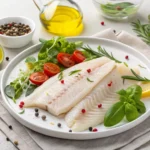
Nutritional Compliance in Seafood Procurement: Tracking Calories in Pangasius Fillets for Commercial Food Labels
Table of Contents
I. Introduction
In the era of “Clean Label” transparency and strict food regulatory compliance, international food manufacturers and large-scale F&B chains must maintain absolute precision over their nutritional data. For procurement managers and R&D chefs, securing a high-protein, low-fat white fish is only half the battle; the real challenge lies in eliminating caloric variance across mass production lines.
Understanding the exact calories in pangasius fillets is no longer just a retail fitness concern—it is a critical commercial necessity for legal packaging compliance, accurate nutritional labeling, and food service margin optimization. This guide breaks down the technical caloric data required to safeguard your commercial product specifications and brand reputation.
II. The Technical Breakdown: Exact Calorie and Macronutrient Profiles
To satisfy rigorous food safety and labeling specifications, procurement teams rely on verifiable empirical data. According to standard food composition databases, a raw, skinless, well-trimmed 100-gram serving of Pangasius provides approximately 80 to 90 calories. When baked or steamed without added oils, the caloric density shifts slightly to about 100 to 110 calories per 100 grams due to natural moisture reduction during the cooking process.
The macronutrient distribution breaks down into a highly efficient protein-to-fat ratio:
- Protein: 13g to 15g per 100g serving, offering a complete amino acid profile essential for lean mass retention.
- Total Fat: 1.5g to 3.0g, with negligible saturated fats. The lipid profile is predominantly composed of heart-healthy unsaturated fatty acids.
- Carbohydrates: 0g, making it ideal for clean-eating, low-carb, and diabetic-safe product formulations.
- Moisture Content: ~80%, ensuring natural succulence without artificial additives.
This clean profile directly underpins the broader nutritional value of pangasius fillets, allowing food service operators to claim a premium low-calorie, high-protein status on their product spec sheets. By utilizing these baseline metrics, R&D departments can seamlessly integrate Pangasius into strict institutional dietary programs where precise caloric tracking is legally mandated.
III. How Trimming Levels Dictate Caloric Consistency
In commercial food processing, the word “untrimmed” is synonymous with “caloric volatility.” While the baseline data for a clean white fish fillet is highly attractive to procurement teams, raw Pangasius possesses a localized lipid layer concentrated heavily within the belly flap, the fat line, and the red lateral muscle tissue. Gram for gram, dietary fat contains more than twice the caloric density of pure protein ($9\text{ kcal/g}$ vs. $4\text{ kcal/g}$). Consequently, if a primary processing facility fails to execute precise trimming, the residual adipose tissue can cause the calories in pangasius fillets to fluctuate wildly—spiking from a lean 80 kcal to over 140 kcal per 100 grams.
For international packers, brand owners, and quick-service restaurant (QSR) franchises, this level of variance is a major legal liability. Random border audits or consumer protection checks can result in severe fines or costly product recalls if the actual caloric values deviate significantly from the nutritional panel printed on the retail packaging.
The only definitive operational mechanism to mitigate this risk is to mandate a strict Pangasius fillet well trimmed specification at the primary sourcing stage. Premium trimming protocols, such as those executed at BAKACO, dictate the absolute physical removal of all red meat, belly fat, and flanking adipose tissues. By standardizing this raw material intervention, you eliminate the unpredictable lipid variable entirely. This allows your R&D teams to lock in a mathematically consistent caloric footprint across thousands of production lots, safeguarding your brand against regulatory pushback and ensuring absolute consumer trust.
IV. Commercial Compliance: Meeting FDA and EU Nutritional Labeling Laws
Navigating international trade barriers requires absolute alignment with global food authorities. Under the United States FDA’s Title 21 CFR Part 101 and the European Union’s Regulation (EU) No 1169/2011, seafood importers bear the full legal burden of truth regarding declared nutritional panels. These governing bodies enforce a remarkably strict margin of tolerance—typically restricting variations to within 20%—between the actual nutrient values verified during random customs audits and the metrics printed on the commercial retail packaging.
If a bulk import lot fails an enforcement screening due to erratic calorie spikes caused by substandard processing and poor fat removal, the financial consequences are severe. Corporate buyers face immediate customs holds, mandatory re-labeling penalties, or systematic border rejections. For large-scale retail networks, quick-service restaurant franchises, or institutional distributors, a single compliance infraction can paralyze an active supply chain and degrade brand equity. Sourcing through BAKACO completely mitigates this regulatory liability. Every mass-production export contract is backed by rigorous Technical Data Sheets (TDS) and accredited laboratory certifications, providing the precise, auditable baseline needed to seamlessly pass international regulatory inspections.
V. The Glazing Factor: Calculating Real Calorie Density per Container
A widespread mathematical error in commercial seafood procurement is calculating caloric density based on gross shipping weight rather than net fish weight. Glazing—the protective ice layer applied to IQF fillets to prevent freezer burn—can constitute anywhere from 5% to 20% of the total box weight depending on specification.
If an industrial kitchen or processing plant calculates its inventory macros using gross container weight, the recorded calories in pangasius fillets will be mathematically diluted, leading to significant errors in bulk menu engineering and product nutrition facts.
By sourcing from transparent manufacturers like BAKACO that guarantee strict net-weight compliance and explicit glaze disclosures, procurement officers can calculate the exact calorie density per container without guesswork. This ensures that every container delivered aligns perfectly with the true nutritional and financial blueprint required by your downstream production lines.
VI. Conclusion
Eliminating caloric volatility is the hallmark of a sophisticated, risk-mitigated food supply chain. By anchoring your seafood sourcing in precise, pre-calibrated raw materials, your brand completely neutralizes the financial threat of international regulatory penalties and packaging non-compliance. BAKACO’s highly audited processing lines ensure that every container delivered matches your exact physical and nutritional specifications, box after box.
Protect your downstream margins and streamline your international customs compliance protocols today.
- [Request Technical Data Sheets]: Contact the BAKACO export desk to receive our verified Certificate of Analysis (CoA) and chemical-free specifications.
- [Secure Your Volume Contract]: Partner with our R&D team to lock in a stable, structurally uniform white fish supply tailored to your exact nutritional labeling requirements.